
What Coolmaths Games Can Teach Businesses About Smarter Promotional Product Strategies
Discover how the logic behind coolmaths games applies to smarter promo product decisions for Australian businesses and resellers in 2026.

Written by
Daniel Voss
Corporate Gifts
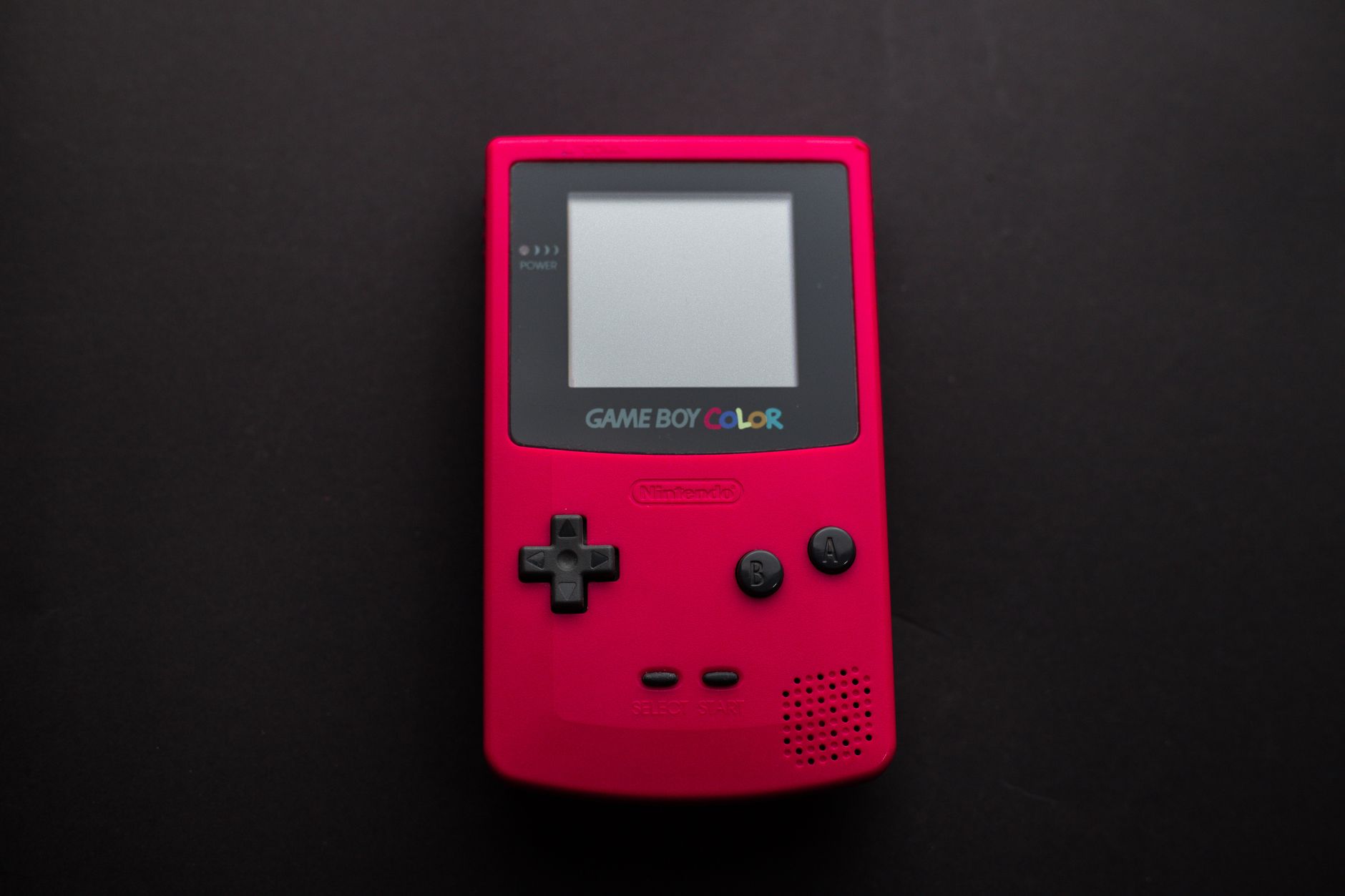
If you’ve ever watched a student completely absorbed in a coolmaths game — working through puzzles, testing strategies, and refining their approach with every failed attempt — you’ve witnessed something genuinely instructive. That same logic-driven, iterative thinking is exactly what separates businesses that get great results from their promotional merchandise from those that waste budget on products nobody wants. Whether you’re a marketing agency in Sydney sourcing corporate gifts for a client, a reseller building a product catalogue, or an in-house brand manager in Brisbane planning your next campaign, the principles behind problem-solving games offer a surprisingly useful framework for making smarter merch decisions. Stick with us — this one’s more practical than it sounds.
What a Coolmaths Game and Promotional Products Have in Common
At first glance, a coolmaths game and a branded tote bag don’t have much to do with each other. But peel back the surface, and the parallels are striking. Both require you to understand your audience deeply, think several steps ahead, and measure what’s working before committing fully.
In a coolmaths game, you don’t just throw random moves at a problem and hope something sticks. You assess the challenge, identify the rules, test a hypothesis, and adjust based on feedback. Promotional product strategy works the same way. The businesses that see the strongest return on their branded merchandise investment are those who approach each campaign like a puzzle — systematically.
Think about a Melbourne-based marketing agency managing promotional gifting for a large corporate client. They’re not picking products at random from a catalogue. They’re asking: Who is the recipient? What problem does this product solve for them? What’s the brand message we need to reinforce? How does the decoration method reflect the quality positioning of the brand? These are strategic questions that require structured thinking — the same kind of thinking that makes a coolmaths game engaging.
For resellers and B2B buyers especially, building that analytical muscle around product selection is what leads to repeat client business and stronger margins. Understanding how to evaluate promotional product suppliers in Australia is an essential first step in building that strategic foundation.
Applying Game-Style Logic to Your Promotional Product Decisions
Know the Rules Before You Play
Every coolmaths game starts with understanding the constraints: the rules of the board, the available moves, the winning conditions. In promotional merchandise, those constraints include budget, minimum order quantities (MOQs), turnaround times, and decoration method limitations.
For context, here’s what typical constraints look like across common product categories in Australia:
- Custom branded pens: MOQs often start at 100–250 units; pad printing is the most common decoration method
- Embroidered polo shirts: MOQs typically 12–24 units; embroidery setup fees usually apply per colour
- Branded keep cups or reusable coffee cups: MOQs from 25–50 units; laser engraving or screen printing available
- Custom notebooks or journals: MOQs from 25 units; debossing and digital printing are popular finishes
- Promotional tote bags: MOQs from 50–100 units; screen printing is the standard decoration method
Knowing these rules upfront prevents costly surprises. A government department in Canberra ordering branded merchandise for a national awareness campaign needs to understand lead times — often 10–15 business days for standard orders, with rush options available at a premium. A Hobart-based charity preparing for a fundraising gala can’t afford to discover three weeks out that their chosen product has an eight-week production window.
This is where working with an experienced promotional products supplier becomes invaluable. They help you understand the game board before you make your first move. Our buying guide to understanding MOQs and minimum order quantities breaks down what to expect across different product types.
Test, Iterate, and Refine
One of the most satisfying aspects of a coolmaths game is the feedback loop — try something, see what happens, adjust. This iterative approach is just as powerful in promotional merchandise strategy.
Experienced resellers and marketing agencies in Australia know better than to go all-in on a single product without testing the waters. Ordering samples before committing to a large production run is one of the smartest moves you can make. Most reputable Australian suppliers offer sample orders, often at a small cost, so you can assess product quality, check colour accuracy against your PMS specifications, and evaluate how decoration looks in person.
For example, a Gold Coast tourism operator considering branded drinkware for their retail offering might order samples of three different stainless steel water bottle styles before committing to 500 units. Holding the product, testing the lid mechanism, and seeing the laser engraving in person tells them far more than a product photo ever could.
Equally important is reviewing what’s worked before. If a branded USB drive landed flat at last year’s trade show, it’s worth asking why — was the product irrelevant to the audience? Was the decoration too small to make an impression? Did recipients already have something similar? Applying that analysis to your next campaign is exactly the kind of coolmaths game thinking that leads to better outcomes. You can explore which tech accessories perform best as corporate gifts to sharpen your product selection approach.
The Strategy Behind Selecting the Right Products
Match the Product to the Puzzle
In any coolmaths game, the tools you’re given matter. Using the wrong tool for the challenge leads to frustration and wasted effort. Promotional products work the same way — the right product for one audience is completely wrong for another.
A Perth mining company sourcing safety-compliant branded workwear for their team needs a very different supplier conversation than an Adelaide boutique agency creating premium corporate gift hampers for C-suite clients. The product, the decoration method, the price point, and the supplier all shift depending on the puzzle you’re solving.
Here are a few scenario-based examples to illustrate:
Corporate conference in Melbourne: Delegates appreciate premium, functional items they’ll use during and after the event. Think branded notebooks with debossed covers, quality pens, or sleek tech accessories like wireless charging pads. Budget range: $15–$45 per head.
School sports carnival in Brisbane: Practicality and colour vibrancy matter here. Custom sublimated t-shirts in team colours, lanyards, and printed drawstring bags serve the audience well. MOQs are manageable even for smaller schools, and sublimation delivers excellent colour saturation. Budget range: $5–$18 per head.
Not-for-profit awareness campaign in Sydney: Eco-friendly products often resonate strongly with cause-driven audiences. Recycled tote bags, bamboo pens, and reusable straw sets reinforce the organisation’s values while staying on message. Budget range: $3–$12 per item.
Reseller building a corporate gift catalogue: Focus on versatile, broad-appeal products with strong margin potential — keep cups, premium branded apparel, and quality stationery consistently perform across sectors. Understanding how to build a profitable promotional products reseller business will help structure your catalogue effectively.
Selecting the right product isn’t about picking your favourite — it’s about solving the client’s specific puzzle. Our guide to eco-friendly promotional products is a great resource if sustainability is a key consideration for your audience.
Decoration Method as a Game Mechanic
If product selection is choosing your pieces, decoration method is how you move them. The wrong decoration choice can undermine an otherwise excellent product selection.
Embroidery on quality polo shirts communicates professionalism and durability — ideal for corporate uniforms or long-term gifts. Screen printing on tote bags delivers bold, high-impact visuals at a cost-effective price point. Laser engraving on drinkware creates an elegant, permanent finish that speaks to quality. Sublimation on synthetic apparel allows full-colour, edge-to-edge designs with exceptional vibrancy.
Each decoration method has its own rules — just like a coolmaths game mechanic. Embroidery has colour and stitch-count considerations. Screen printing typically requires PMS colour matching and is most economical at higher quantities. Laser engraving works best on metal and wood surfaces. Understanding these nuances is part of playing the game well. Our comparison of screen printing versus embroidery is worth reading before you commit to a decoration method.
Bringing It All Together: A Smarter Approach for Australian Businesses
The coolmaths game framework — assess, strategise, test, iterate — gives businesses and resellers a repeatable process for making better promotional product decisions. It’s not about being clever for its own sake. It’s about being deliberate, data-informed, and audience-focused in every campaign.
Australian businesses investing in branded merchandise deserve more than a catalogue browse and a quick quote. They deserve a structured approach that considers the recipient, the message, the product quality, the decoration finish, and the supplier’s ability to deliver on time and on brief. For resellers especially, developing this strategic discipline is what builds long-term client trust and repeat business.
Whether you’re sourcing premium corporate gift ideas for executives, exploring custom branded apparel options for your team, or putting together event merchandise for a major conference, the thinking process is the same. Define the challenge. Understand the constraints. Choose the right tools. Test before you scale. Refine based on results.
If you work with schools or education clients, our guide to promotional products for schools and education offers targeted advice for that sector. For those managing campaigns for healthcare or government clients, understanding sector-specific considerations around product compliance and suitability is equally important.
Key Takeaways
- Think strategically, not reactively: Approach every promotional merchandise brief like a puzzle — understand the audience, constraints, and objectives before selecting products.
- Know your constraints upfront: MOQs, turnaround times, decoration method limitations, and budget ranges should all be mapped before a product is selected.
- Sample before you scale: Never commit to a large production run without physically reviewing a sample — quality, colour accuracy, and decoration finish can vary significantly.
- Match product to audience: The right product for a corporate conference is completely different from the right product for a school sports day or a charity campaign.
- Iterate and improve: Track what works across campaigns, ask for client feedback, and apply those learnings to refine your product selection and supplier relationships over time.
The coolmaths game mindset — structured, logical, feedback-driven — is a genuinely powerful lens for any Australian business or reseller looking to get more from their promotional merchandise investment in 2026 and beyond.